Why creative posing matters
Posing is where emotion, composition, and storytelling meet. The right pose does more than make a flattering image; it reveals a couple's relationship, complements bodies and outfits, and creates motion for cinematic wedding film. A creative approach to posing helps couples feel relaxed, reduces stiffness, and turns moments into memorable stills and moving sequences.
In this guide you'll find practical, personality-driven posing ideas for a range of couples—shy and expressive, classic and modern, tall-and-slim to curvy, adventurous and intimate. Each section includes photographer cues, partner prompts, and tiny technical notes to make images sing.
General rules before you pose anyone
- Start with comfort: always check how the couple feels about an idea and offer softer alternatives.
- Use micro-directions: subtle cues like "tilt your chin down a touch" or "squeeze hands" are better than full-body repositioning.
- Think in triangles: create angles with arms, legs, and gaze to avoid rigidity.
- Employ motion: even a small walk, a laugh, a sway, or a glance creates life for both photos and cinematic film.
- Adjust for light: move poses toward flattering light — soft window light, open shade, or golden hour backlight.
Posing ideas by couple personality
For the intimate and shy couple
-
The Cozy Lean: Partners stand forehead-to-forehead or temple-to-temple, eyes closed. Keep hands low and connected—one hand around the waist, the other holding hands. This feels private, perfect for close-up portraits.
-
Whisper and Laugh: Ask one partner to whisper something silly. The resulting look back at the camera or shared laugh will create natural expressions.
-
Wrapped in Embrace: One partner wraps both arms around the other from behind (or the shorter partner reaches up). This protects and encloses the couple, producing soft lines and a sense of security.
Photographer tips: Use a longer lens (85–135mm) for intimate frames and keep distance to preserve their privacy. For cinematic film, capture the slow inhale, the micro-movement of hair, and a gentle pull to capture emotion.
For the playful and outgoing couple
-
The Spin-Out: Hold hands and do a loose spin. Catch a sequence: anticipate the hair and dress motion, and step in for the decisive frame when both are smiling or mid-laugh.
-
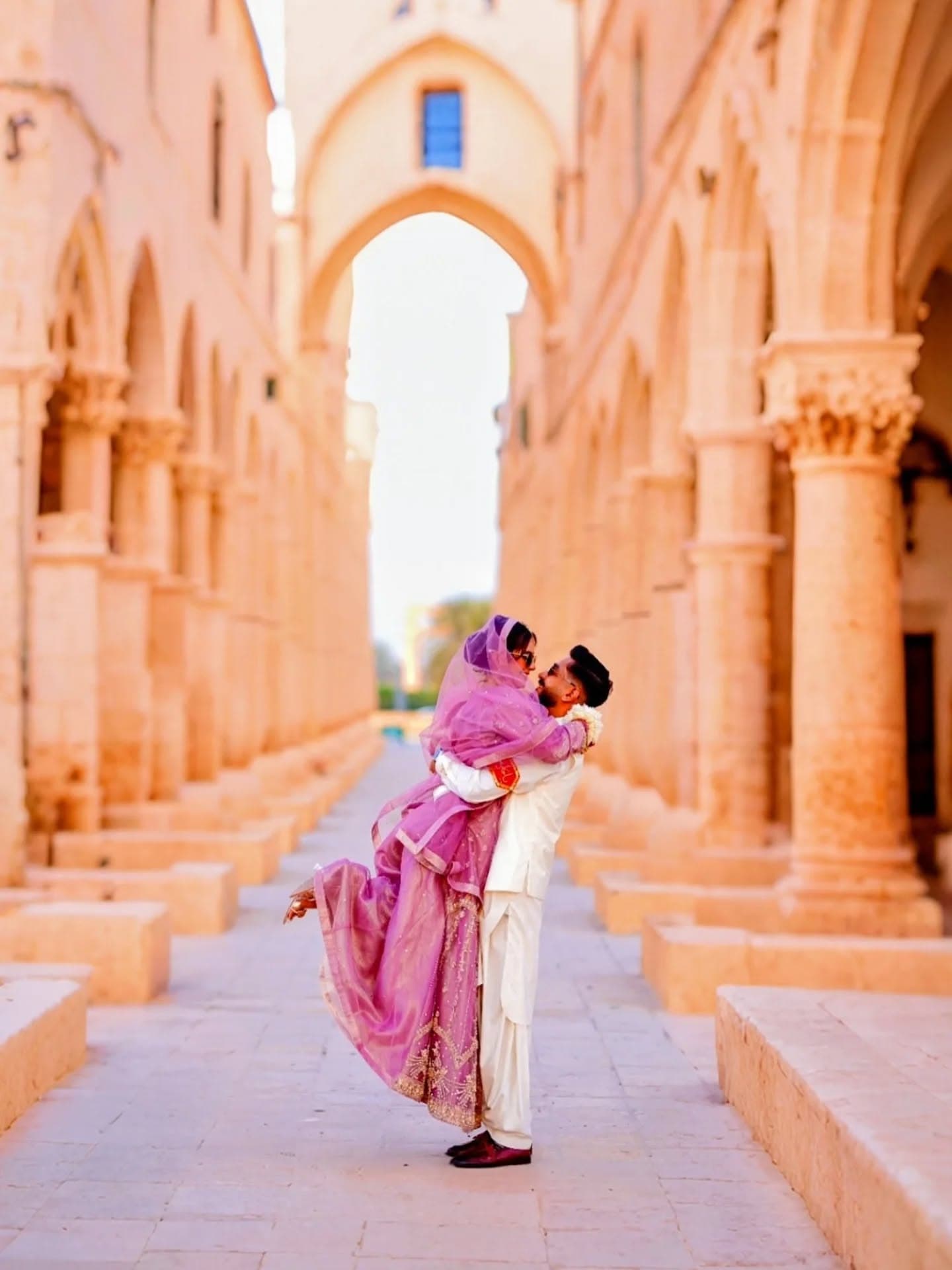
The Lift and Dip (Casual): A low, safe dip in a grassy or relaxed setting—keep it brief and guided. If lifts feel formal, try a playful piggyback or a pretend chase.
-
Mirror Moves: Have partners mimic each other's small moves—one raises an eyebrow, the other copies. It creates playful symmetry and natural timing for film.
Photographer tips: Use a faster shutter for crisp motion stills and steady gimbal or handheld for film to keep energy raw and immersive.
For the classic and elegant couple
-
The V-Frame: The couple forms a neat V with their bodies angled slightly toward the camera; the bride’s arm rests softly on the groom’s chest, groom’s hand at small of back. This elongates the silhouettes and reads timelessly.
-
Architectural Framing: Use doorways, archways, or stair rails as natural frames. Position the couple slightly off-center and allow the architecture to add context and lines.
-
Slow Waltz Walk: Guide them to walk slowly as if dancing, with small steps and gentle eye contact, creating graceful motion for photos and film.
Photographer tips: Keep poses minimal and refined. Favor flattering light and soft backgrounds to maintain an elegant, editorial aesthetic.
For adventurous and outdoorsy couples
-
The Lookout Stance: Place them on a ridge, wooden bridge, or cliff edge (always prioritize safety). One partner looks at the view while the other leans into them—capture wide and detail shots.
-
Motion Silhouette: Backlight against sunset or sunrise. Have them walk or raise arms for silhouettes that emphasize landscape and emotion.
-
Lean and Balance: Use natural elements—rocks, trees, or a vintage car—where one partner leans while the other balances beside them. This creates dynamic lines and relaxed poses.
Photographer tips: Scout safe, accessible poses. Use wide lenses for context and a gimbal for flowing cinematic movement during reveal shots.
For same-sex couples
-
Power Poses: Emphasize partnership over gendered roles—mirror each other’s posture or interlock arms for equality and symmetry.
-
Individuality Pairing: Alternate frames that highlight each partner’s personality—one quirky, one serene—then combine them in a shared pose like a tandem gaze or shared laugh.
-
Unity Gestures: Small rituals like clasping both hands or forehead touches read as intimate and intentional, working well in both photography and film.
Photographer tips: Listen to how the couple defines roles and dynamics and translate that language into poses that feel genuine.
Posing for body types and flattering angles
No two bodies are the same. These small adjustments help create flattering lines.
For taller partners with shorter partners
-
Create staggered heights: The taller partner can sit while the shorter stands or the shorter stands on a step. Use stairs and terrain to level eye-lines.
-
Lean and scoop: Have the taller partner slightly lean in and lower shoulder height. This brings faces closer and avoids awkward long necks.
For curvy or plus-size couples
-
Embrace curves: Use wraps, seated poses, and three-quarter angles. Hands at the waist, hip, or upper back provide defined lines.
-
Seat and tilt: Sitting slightly angled with a relaxed shoulder toward camera creates slimming lines and comfort.
For petite partners
-
Elevate subtly: Use steps, green berms, or low chairs to add height where needed. Keep feet visible for proportion.
-
Lean forward: A small forward lean toward the camera shortens torso lines and brings focus to faces.
Photographer tips: Communicate clearly and adjust poses incrementally so couples feel in control. Use framing and focal length to manage proportions, and prefer three-quarter or seated poses if full-length feels challenging.
Group and family posing that feels natural
-
Anchor the shot: Place tall family members at the back or edges to create a balanced pyramid shape. Keep hands connected—arms around waist, holding hands—to show unity.
-
Movement trick: Ask families to walk toward you while chatting. Capture candid laughs, glances, and transitions rather than stiff rows.
-
Layered depth: Use foreground-middle-background layering—parents in front, kids staggered—to create depth and storytelling in both photographs and film.
Photographer tips: Keep directions short and singular, e.g., "Look at each other and laugh", rather than combining multiple cues.
Small gestures, big emotions
Tiny details read powerfully in portraits and cinematic films. Consider these micro-poses:
- Forehead touch: A classic for intimacy; it compresses faces and shows tenderness.
- Nose-to-nose: Slightly playful and intimate—works great for close-ups.
- Hand study: Close-ups of hands—fingers interlocked, thumbs stroking—tell a tactile story.
- Coat wrap: One partner drapes their jacket or shawl over the other for a protective, romantic look.
Photographer tips: Zoom in for detail shots. For film, linger on these gestures with a slow push-in.
Bridal- and groom-specific posing notes
-
Bridal portraits: Encourage movement—twirling, walking, and soft head turns—to animate the dress. Use posed seated shots for lace/detail emphasis.
-
Groom portraits: Use strong lines—leaning on a railing, jacket over shoulder, or standing with hands in pockets. Remind grooms to relax their jaw and shoulders.
Photographer tips: Mix wide portraits with close details—rings, cufflinks, boutonnières—to build a varied storytelling sequence.
Lighting and composition cues that elevate poses
-
Backlit glow: Place the couple between your camera and the light source (sunset, window) to create a rim light around hair and shoulders, adding depth and romance.
-
Open shade: For even skin tones, seek open shade near architecture or trees. It avoids squinting and harsh shadows.
-
Leading lines: Use pathways, lines of a pier, or stair rails to lead the eye toward the couple.
Photographer tips: For cinematic film, pair backlighting with slow camera movement (dolly or gimbal) for a floating, cinematic reveal.
Transitioning between poses smoothly
-
Use a bridging action: Ask couples to take a step, slide a hand, or turn their heads slowly—these small movements connect poses organically.
-
Stack shots: Start wide, then request a subtle move and close in for mid and tight frames. This gives a sequence of complementary images.
-
Cue with emotion: Instead of rigidly describing a pose, suggest an emotion or memory—"remember your first date"—and let natural reactions guide the next pose.
Photographer tips: Keep a mental shot list but allow improvisation. Shooting tethered or with quick preview helps couples see and relax.
Poses that read well on camera and in film
-
Action-friendly holds: Dancing, walking, and gradual turns produce fluid motion for cinematic edits while also delivering strong stills.
-
Continuous moments: Capture a continuous minute of interaction—leading, teasing, or simply breathing together—and pick the best frames; the same footage will produce beautiful short film clips.
-
Emotional beats: Plan to film 10–20 seconds around each posed transition so you have natural lead-in and lead-out for edits.
Photographer tips: Coordinate with your film partner (if separate) to ensure both stills and motion are captured without interfering with each other.
Practical pose scripts you can say to couples
-
"Walk slowly toward me, hold hands, and chat about your favorite trip. I'll tell you when to look up." (Great for natural smiles.)
-
"Stand close, forehead together, breathe in slowly and let it out—then think of something funny." (Instant relaxation.)
-
"Turn toward each other, one step closer, and rest your hands where it feels natural." (Good for awkward first poses.)
-
"I want a twirl—one spin and a laugh—then freeze where it feels organic." (For playful motion and dress detail.)
Final notes: rehearsal, consent, and authenticity
Always ask permission before suggesting intimate or experimental poses. Some gestures have cultural or personal meaning—listen first. Offer alternatives and rehearsal time; many couples appreciate being shown how a pose will look before committing. The best images come from authentic moments guided with empathy, clarity, and a little creativity.
Bringing these poses into your wedding day workflow
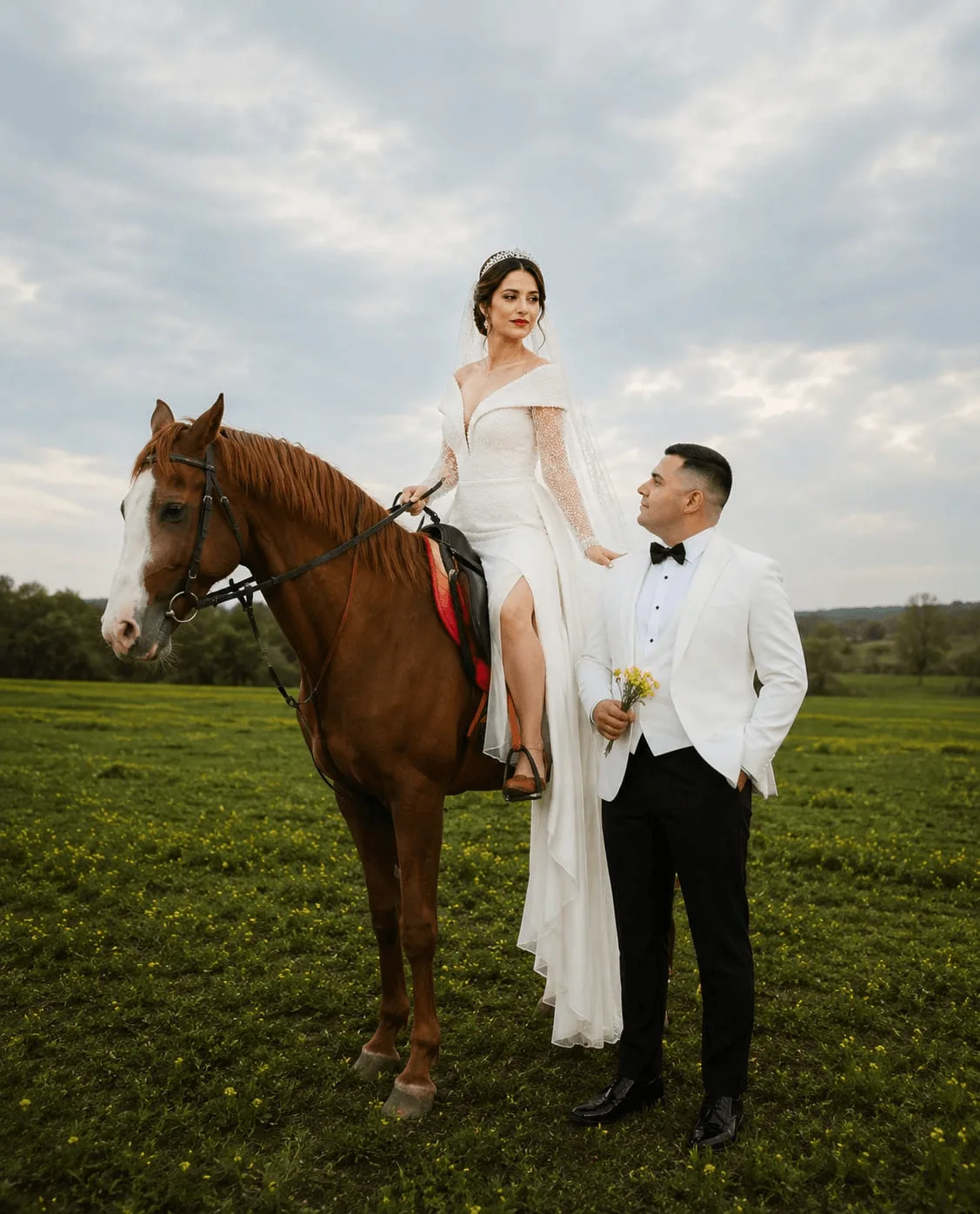
Create a quick pose menu for the couple: three must-have portraits, two creative or adventurous shots, and a few candid sequences. This structure helps you move fluidly through formal time constraints while leaving room for spontaneous moments.
Document these poses in your shot list and adapt them to venue, light, and timing. For destination weddings, scout a few signature backgrounds and pre-visualize poses so you can capture them efficiently when the light is right.
Closing thoughts
Creative posing is less about rigid formulas and more about creating conditions where a couple's true connection can show itself naturally. Use personality, context, and movement to guide your choices. Small directions, thoughtful lighting, and a focus on comfort will yield images that feel real, flattering, and cinematic.

Every couple deserves poses that reflect who they are. Keep your directions human, your compositions intentional, and your shoots open to improvisation—and you'll create portraits and wedding film sequences that stand the test of time.
Frequently Asked Questions
How do I choose poses that suit our personalities?
Start with an honest conversation about energy levels and comfort zones. Share a short pose menu (intimate, playful, classic, adventurous) and ask the couple to pick favorites. Use those choices as your blueprint while remaining open to spontaneous moments.
What if one partner is uncomfortable posing?
Offer micro-directions and movement-based prompts rather than static poses. Encourage small, familiar gestures—holding hands, a forehead touch, or a slow walk. Compliment frequently and show previews so they see flattering results.
How do poses translate from photos to cinematic wedding film?
Prefer poses that include motion and micro-expressions. Small actions—turning heads, breathing together, laughing—create usable stills and natural film clips. Coordinate with your film teammate to capture continuous moments for edit-friendly footage.
Are there poses that flatter every body type?
Three-quarter angles, seated poses, and slight offsets from the camera are universally flattering. Focus on creating lines with arms and legs, using props or steps for varied heights, and emphasizing comfort to avoid stiffness.
How can we plan portrait time without feeling rushed?
Create a short prioritized list: two must-have portraits, two creative shots, and two candid sequences. Share it with your planner and photographer so portrait windows are protected in the timeline.
Do you recommend staging poses at the ceremony site or elsewhere?
Both can work. Ceremony-site portraits capture context and emotion while venue portraits or nearby scenic locations offer variety and better light. Scout locations ahead and factor travel time into the schedule.
Begin Your Wedding Story
Ready to craft portraits and film that reflect your story? Contact Wedding Story Films to plan posed and cinematic moments for your day.